Built for people who outgrow flat notes

However you think — in ideas, boards, lore or findings — Nodio gives you one local graph for it. Each path ships with a matching starter template.

01. Narrative / Crime Fiction

Every clue and alibi, kept straight

The problem. A mystery lives or dies on consistency — but suspects, clues, timelines and red herrings scattered across documents drift, and a plot hole a reader spots is one you can’t take back.

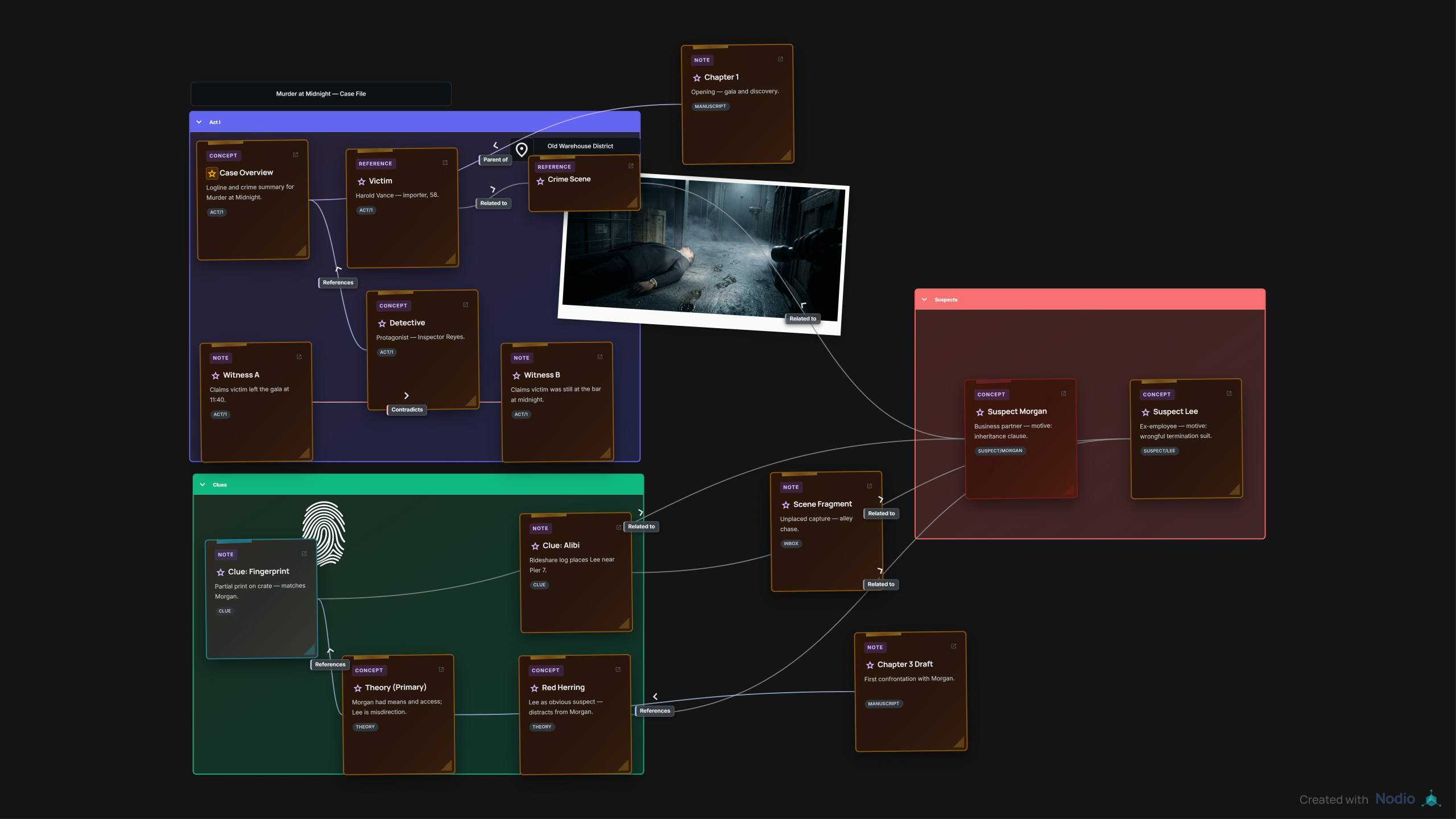
How Nodio helps. Lay out suspects, clues, locations and events as nodes, linked by typed relations like “alibi for”, “witnessed” and “contradicts”. A timeline fixes who knew what and when, and a graph lens pulls up everything tied to a single suspect — so every clue is planted on purpose and the solution plays fair.

02 · Game Dev

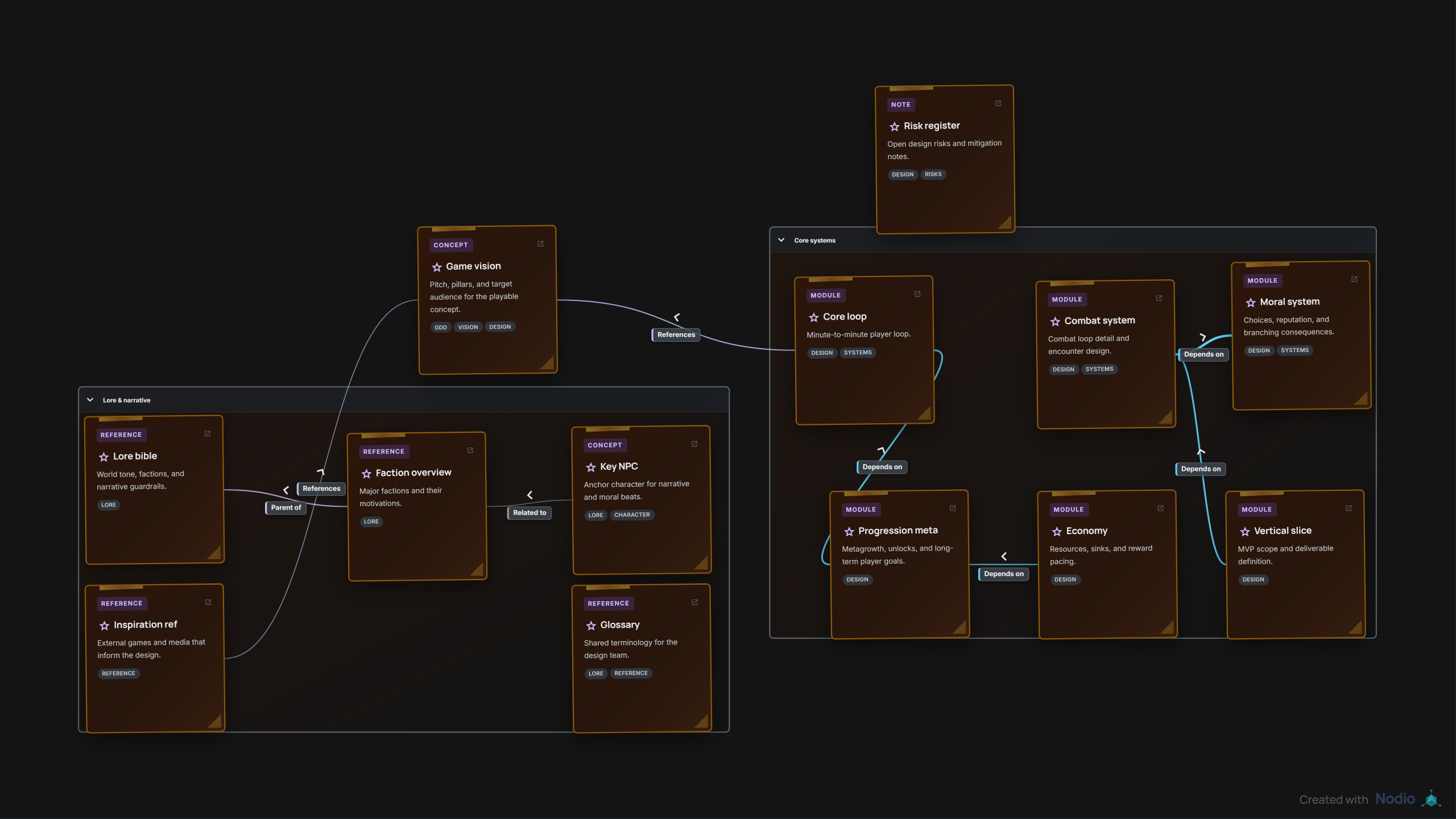
Your whole GDD on one board

The problem. Design docs, lore and quest logic end up scattered across wikis and folders, so the big picture is impossible to hold.

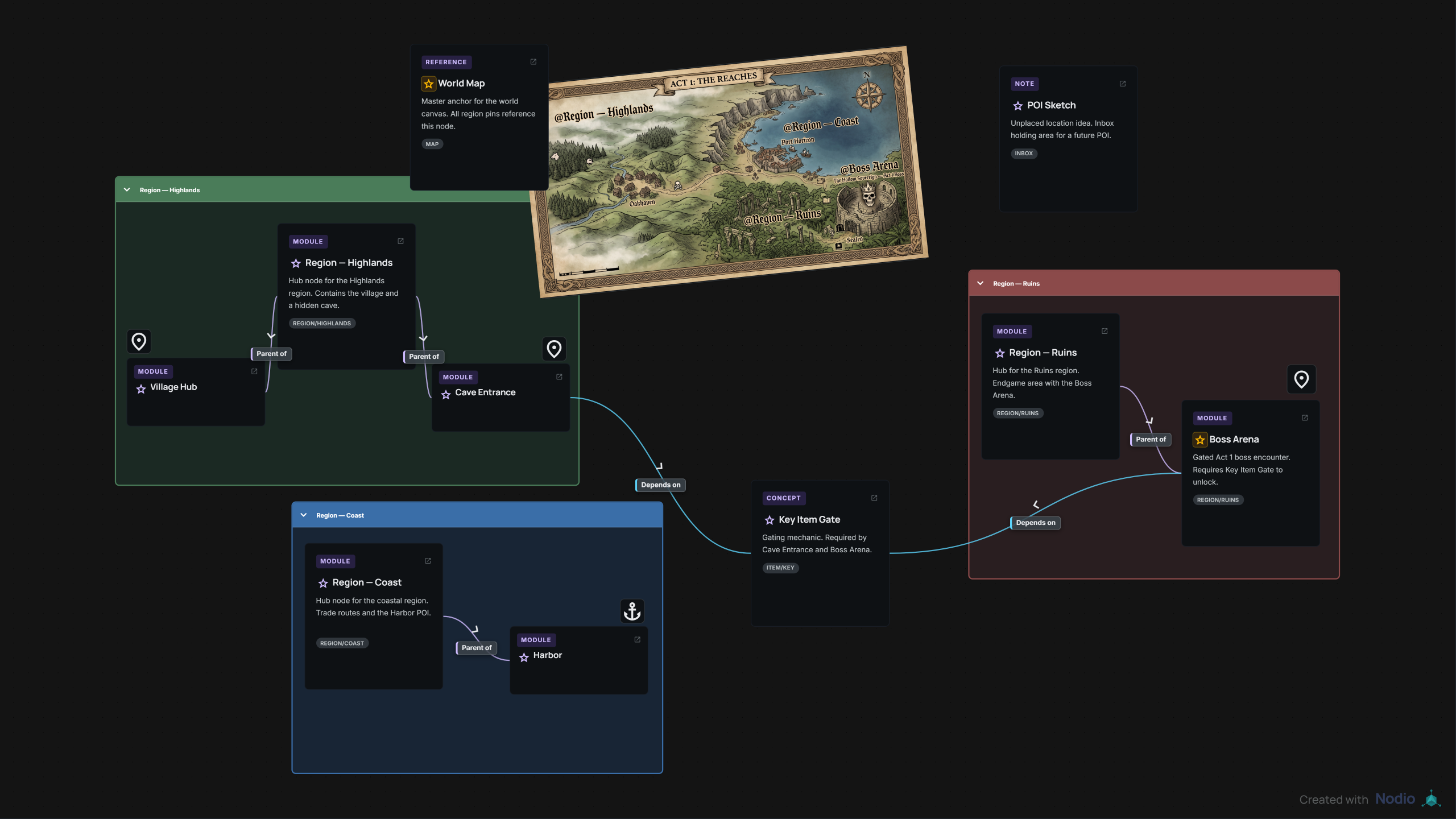
How Nodio helps. Lay out characters, locations and quests as nodes, connect them with narrative relations like “depends on” and “contradicts”, group acts visually, and pitch the whole thing as a slideshow with camera fly-through.

03 · Sprint planning

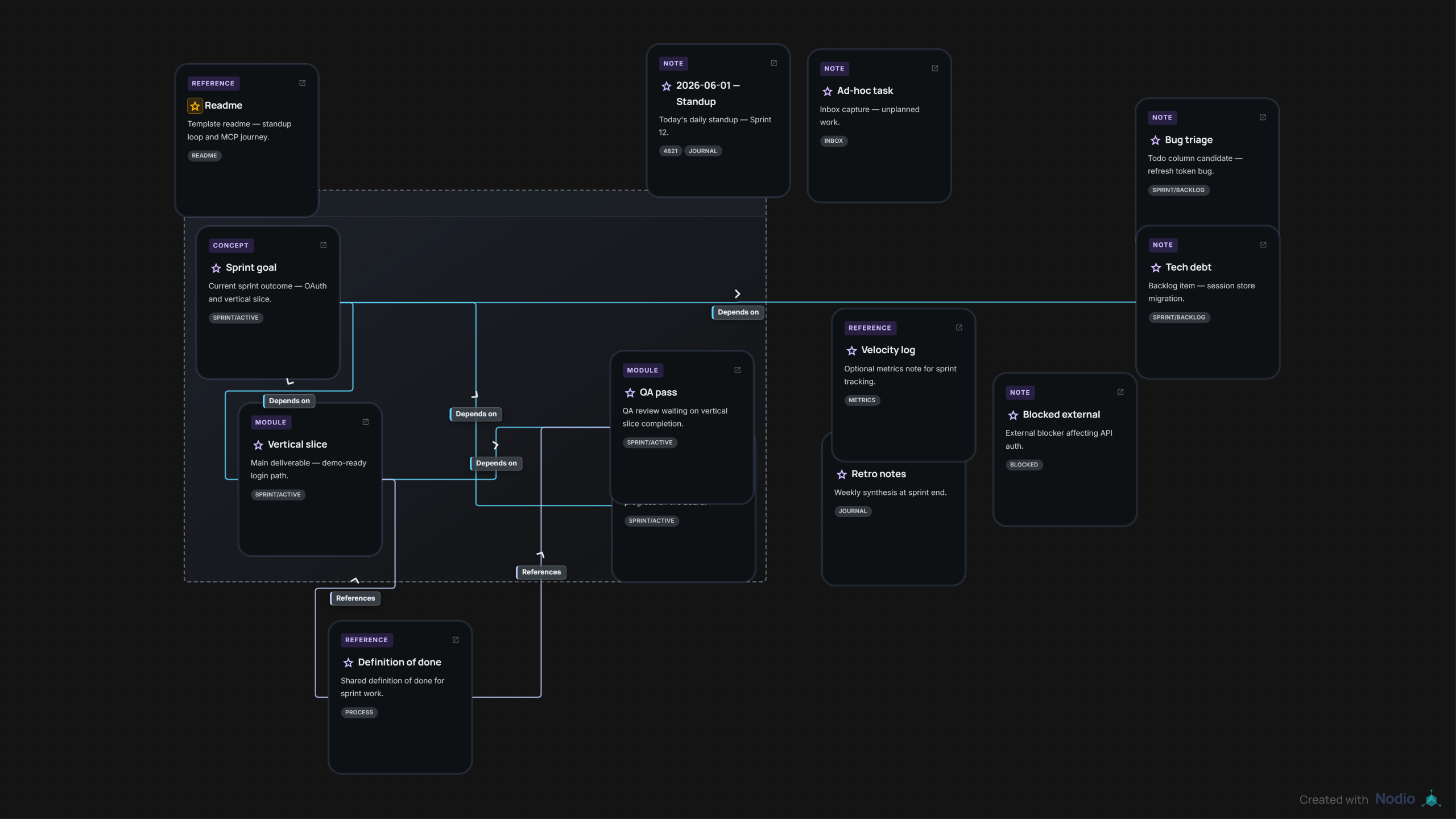
Boards that know about dates

The problem. Trello-flat boards lose context and have no real dependencies — you can’t see what blocks what.

How Nodio helps. Kanban columns tie to real graph nodes, a timeline view adds finish-to-start dependency arrows on those same cards, and WIP limits plus card aging keep sprints honest.

04 · Cyber Security

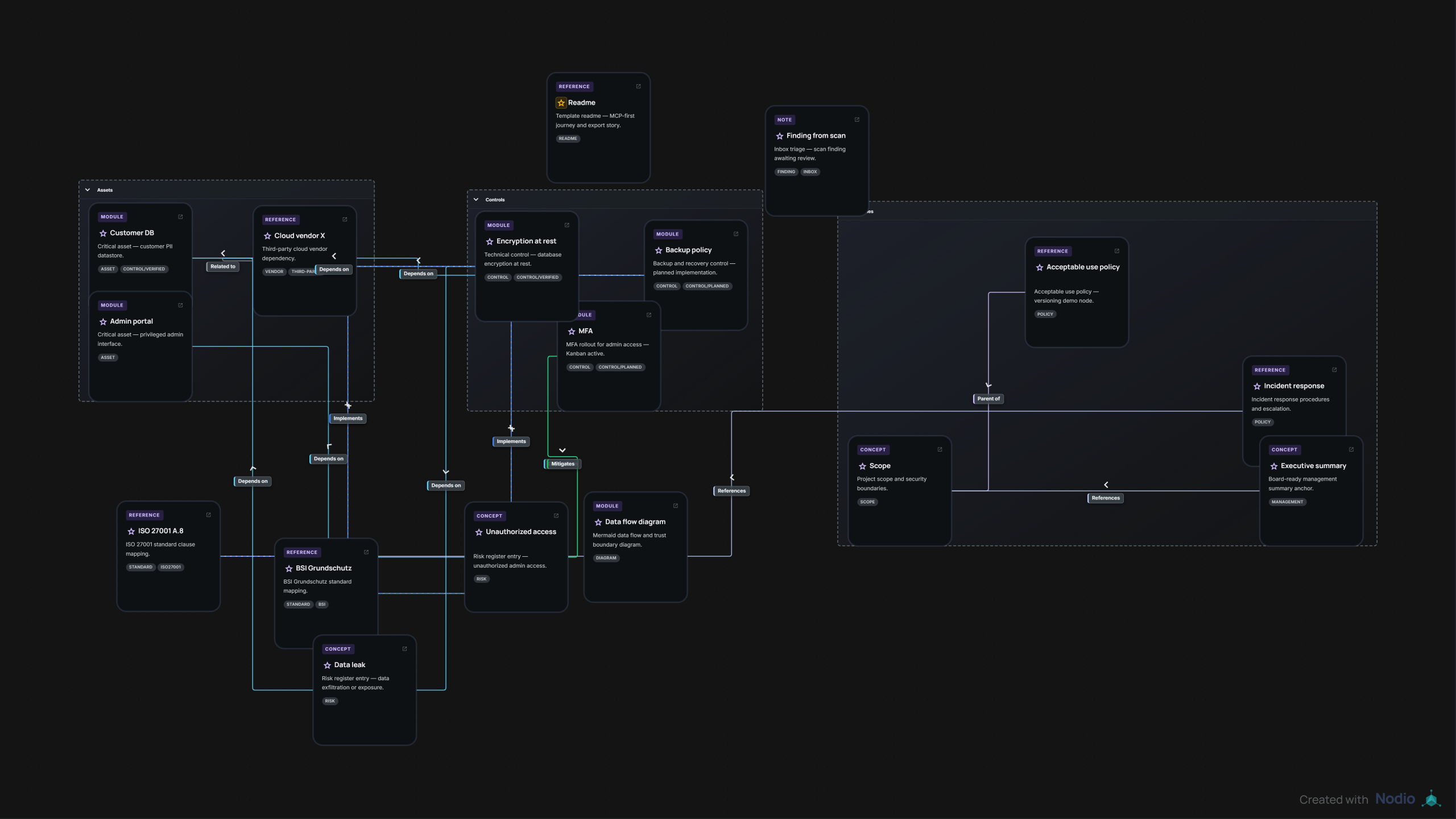
Findings with an audit trail

The problem. Security findings live in disconnected documents with no history — proving what changed and when is painful.

How Nodio helps. Structure findings and assets as a typed graph, then lean on the audit log and ghost view to see before/after states, and replay the whole investigation with canvas time-lapse.

05 · Freelancer

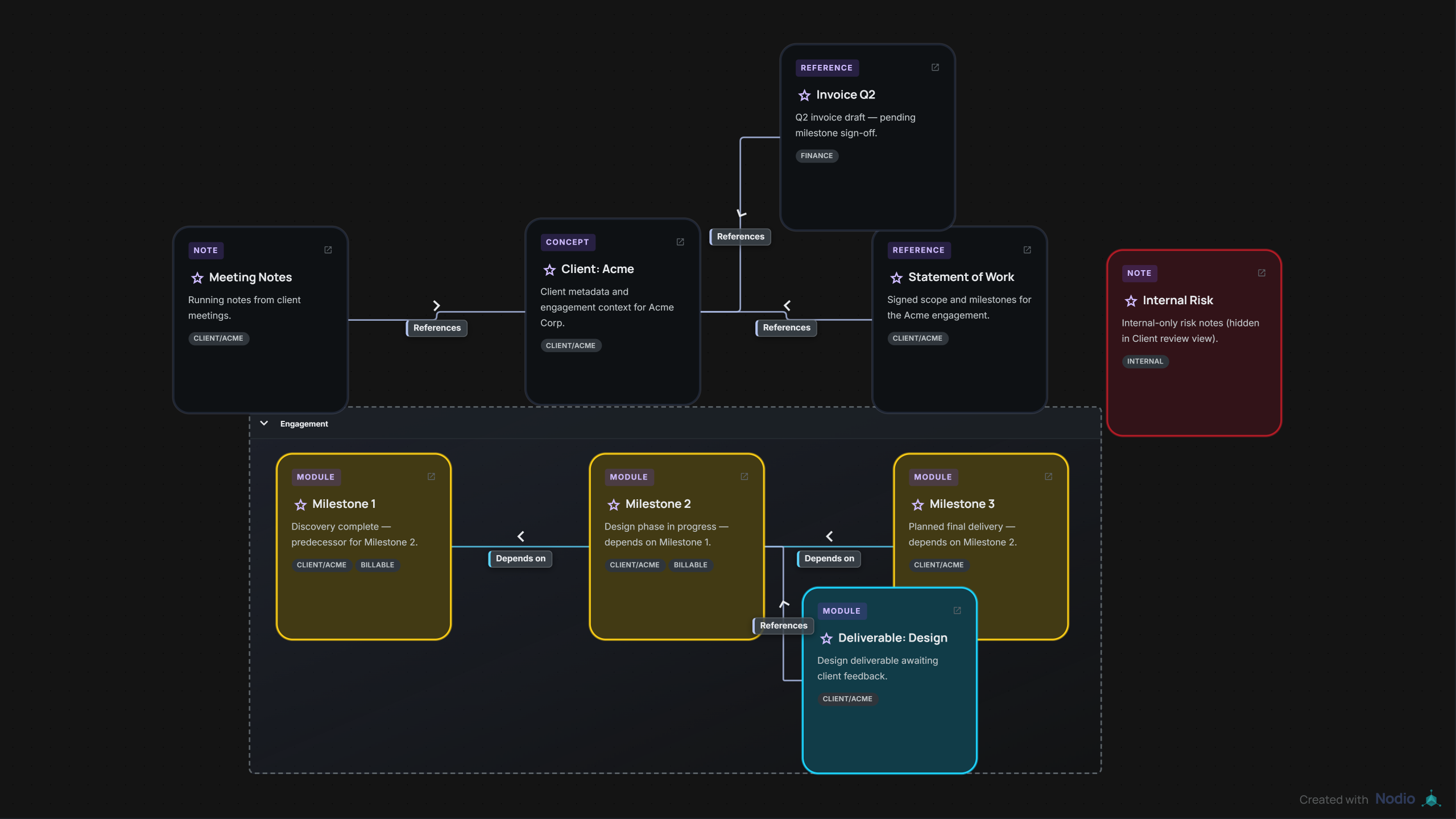
One tool for every client

The problem. Juggling a different stack per client means scattered data — often sitting in someone else’s cloud.

How Nodio helps. Keep one portable .db per client, fully local and private, export per project when you deliver, and mirror notes to Markdown with Live-Write for whatever editor a client prefers.

06 · Worldbuilding

A lore bible that holds together

The problem. Wikis and doc folders let a world sprawl until timelines clash and characters contradict each other — and nobody notices the break until a reader does.

How Nodio helps. Model factions, characters, locations and events as nodes linked by typed relations like “ally of”, “ruled by” and “descends from”. A graph lens surfaces every connection, nested groups keep regions and story arcs tidy, and Views presents the whole world as a slideshow for your players or co-writers.

07 · API Documentation

Docs that map your system

The problem. API docs live as flat pages — endpoints, schemas and auth flows scattered, with no map of how they connect or what depends on what.

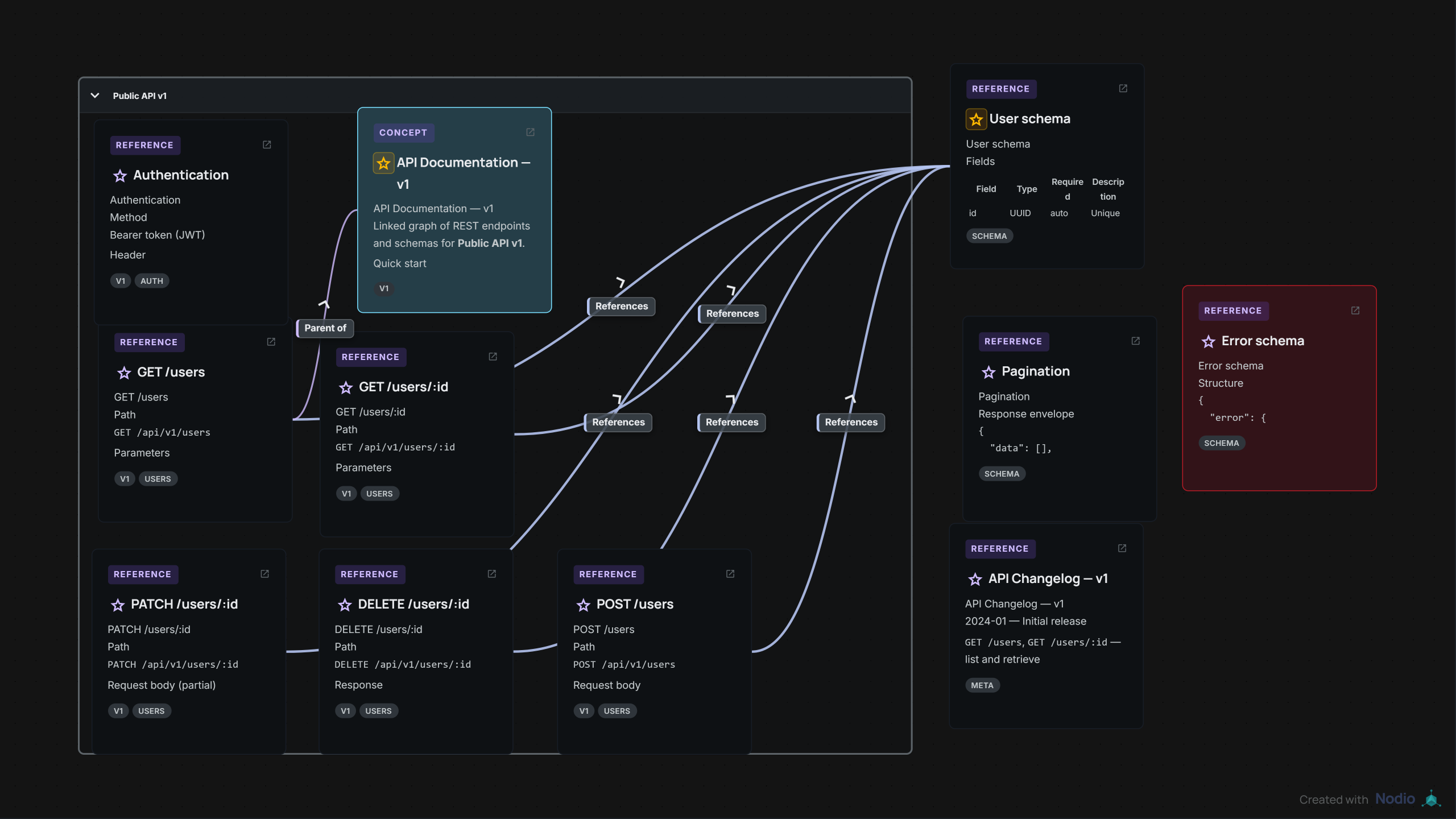
How Nodio helps. Lay out endpoints, schemas, services and flows as a typed graph, link them with relations like “calls”, “returns” and “depends on”, and keep the whole surface navigable with a graph lens. Mirror it to Markdown with Live-Write so the same model feeds your repo or static-site docs.

Pick a template and start.

Every use case ships as a ready-made .db you can open on day one. Free during beta · no account required.